How Much Protein Do You Need a Day?
Most healthy adults need about 0.8 grams of protein per kilogram of body weight a day. That is roughly 56 g for a 70 kg person. If you train, want to lose fat or are over 65, your number is higher. Below you will find your daily protein target, how to split it across meals, and easy recipes that get you there.

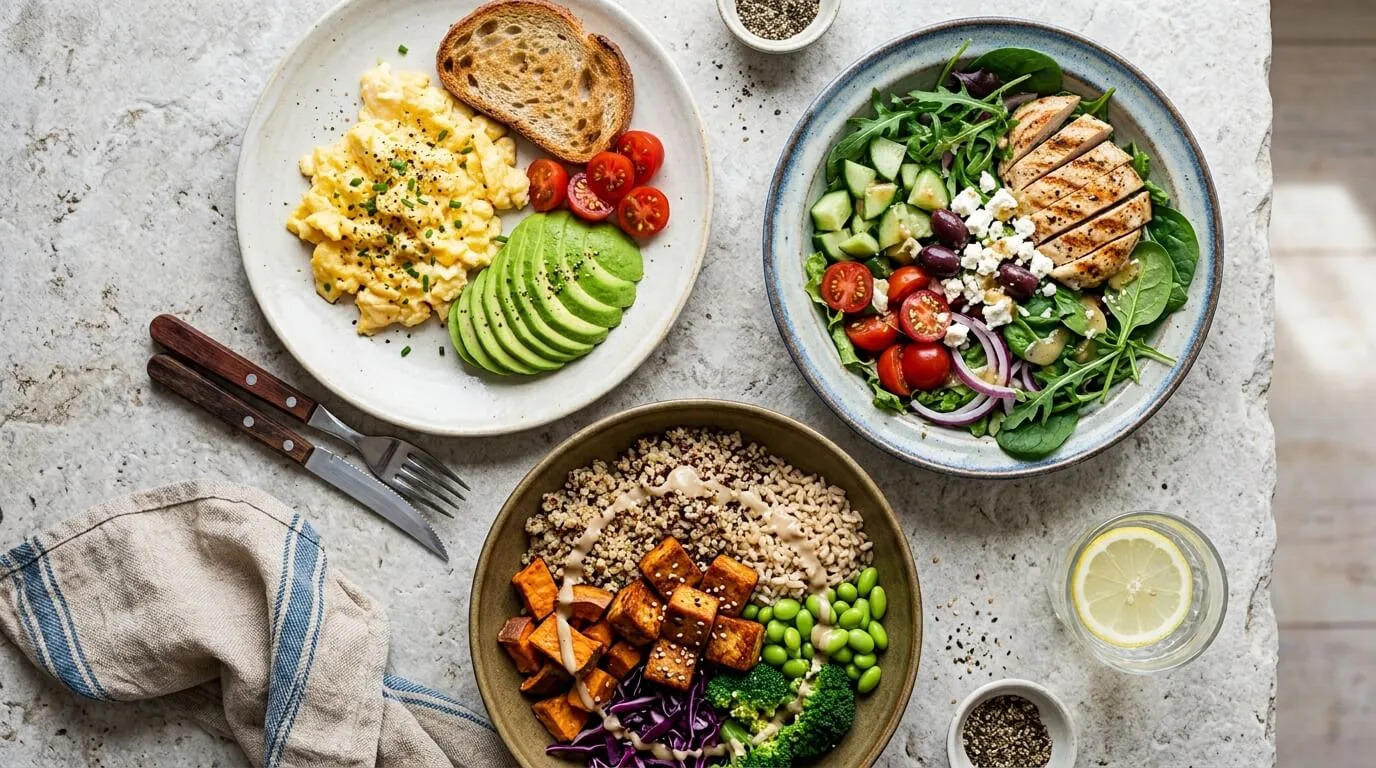
Short answer: most healthy adults need 0.8 g of protein per kg of body weight per day. People who train regularly need 1.2–2.0 g/kg, and adults over 65 benefit from 1.0–1.2 g/kg.
How much protein do you need per day?
| Who you are | Protein per kg body weight | Example: 70 kg person |
|---|---|---|
| Healthy adult, little exercise | 0.8 g | 56 g |
| Adult over 65 | 1.0–1.2 g | 70–84 g |
| Active older adult | 1.2 g or more | 84 g+ |
| Regular strength or endurance training | 1.2–2.0 g | 84–140 g |
| Losing fat while keeping muscle | 1.2–1.6 g | 84–112 g |
| Pregnant or breastfeeding | 1.1 g | 77 g |
These are general ranges for healthy people. If you have kidney disease or another medical condition, ask your doctor or a registered dietitian for your number.
How to calculate your daily protein needs
Multiply your body weight in kilograms by the number for your situation from the table above.
Body weight (kg) × protein factor = grams of protein per day
Examples:
- 60 kg, mostly sitting: 60 × 0.8 = 48 g a day
- 75 kg, lifting weights 3 times a week: 75 × 1.6 = 120 g a day
- 68 kg, age 70: 68 × 1.1 = about 75 g a day
If you think in pounds, multiply your weight in pounds by 0.36 for the basic 0.8 g/kg target. A 150 lb person gets about 54 g.
The 0.8 g/kg figure is the Recommended Dietary Allowance. It is the minimum amount that covers the needs of almost all healthy adults, not the ideal amount for everyone. Many people eat more and feel better for it, especially when they are active.
Do you need more protein if you exercise?
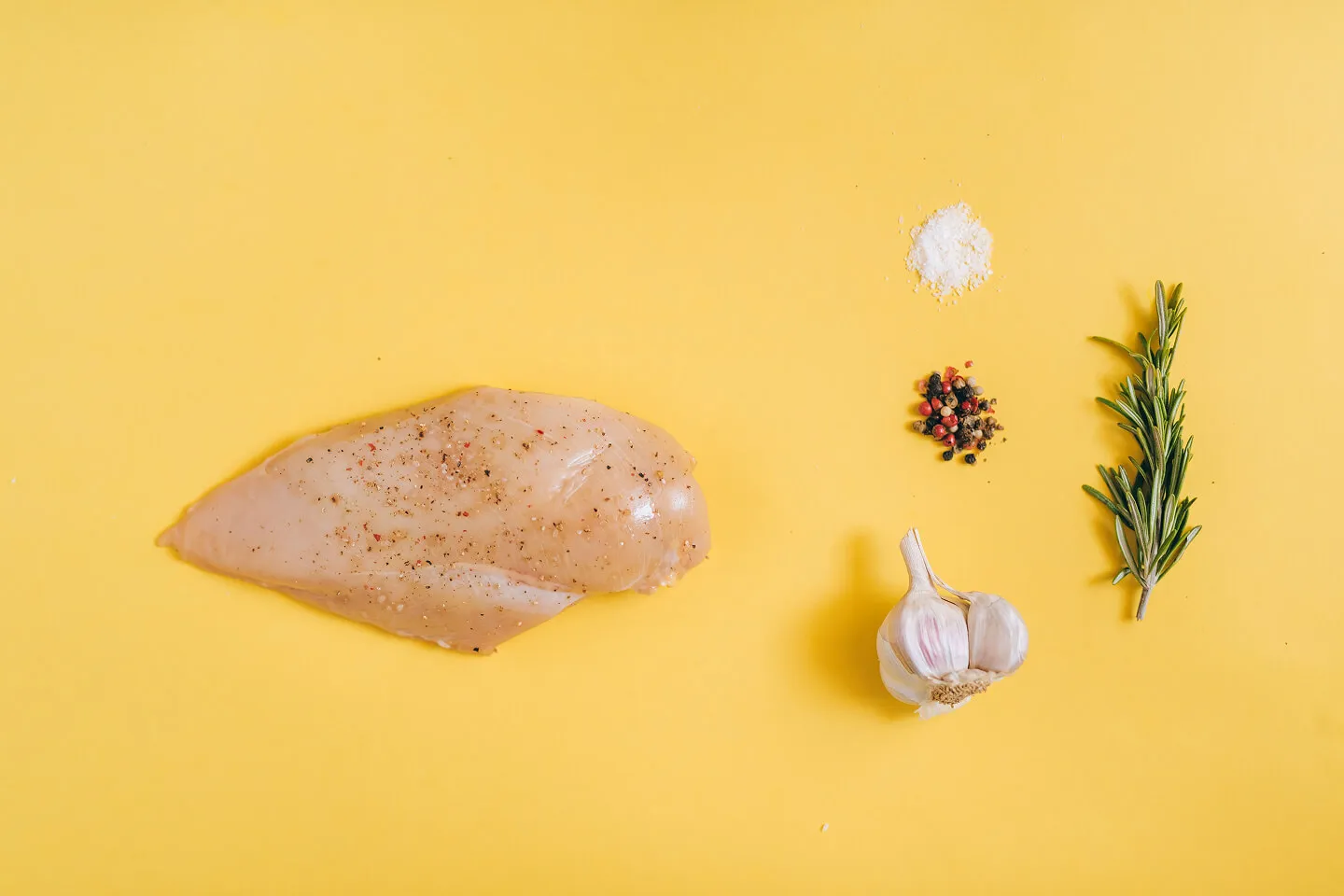
Yes. People who train regularly need about 1.2–2.0 g of protein per kg of body weight per day, according to the NIH Office of Dietary Supplements. Protein helps your muscles repair and adapt after training.
Strength training sits toward the top of that range. Endurance training, like running or cycling, sits lower. More than about 2.0 g/kg has not been shown to add extra muscle for most people.
Protein to build muscle
To build muscle, aim for 1.6–2.0 g/kg and train with weights at least 2–3 times a week. Protein alone does not build muscle; the training does, and protein supplies the building material.
Need ideas? Try our [high-protein chicken bowl]
Protein for weight loss
Eating more protein can make weight loss easier. Protein keeps you full longer, and a higher intake helps you keep muscle while you eat fewer calories. A range of 1.2–1.6 g/kg is commonly used for fat loss.
The simplest way to do it: build every meal around a protein source, then add vegetables and a smaller portion of carbs. Start with our [Baked Lemon Butter Cod]
Protein for adults over 65
Older adults need more protein, not less. The PROT-AGE study group recommends at least 1.0–1.2 g/kg a day for adults over 65, and 1.2 g/kg or more for those who stay active. This helps slow the muscle loss that comes with age.
Many older adults eat a small breakfast with little protein. Adding eggs, yogurt or cottage cheese in the morning is an easy fix. See our [Chocolate Banana Peanut Butter Protein Shake]
Protein during pregnancy and breastfeeding
Pregnant and breastfeeding women need about 1.1 g/kg a day. That works out to roughly 25 g more than before pregnancy. A glass of milk and a small portion of fish or lentils covers most of the extra.
How much protein per meal?
A good rule is 20–40 g of protein per meal, spread over 3–4 meals. Your body uses protein better when it comes in steady portions through the day than in one big dinner.
In practice, that means a palm-sized portion of meat, fish or tofu, or 2–3 eggs, or a big bowl of Greek yogurt at each meal.
A high-protein day: sample menu
This day gives about 110 g of protein, a good target for a 70 kg person who trains. Swap in any recipes you like.
| Meal | Recipe | Protein (approx.) |
|---|---|---|
| Breakfast | Cottage Cheese Pancakes | 15 g |
| Lunch | High-Protein Chicken Bowl | 48 g |
| Snack | Cottage Cheese Egg Bites | 12 g |
| Dinner | Grilled Flank Steak Salad | 35 g |
| Total | ≈ 110 g |
High-protein foods: how many grams in each
These common foods make it easy to reach your daily protein. Values are approximate and vary by brand and cooking method.
| Food | Portion | Protein (approx.) |
|---|---|---|
| Chicken breast, cooked | 100 g | 31 g |
| Canned tuna, drained | 100 g | 25 g |
| Salmon, cooked | 100 g | 22–25 g |
| Greek yogurt, plain | 170 g (1 cup) | 15–17 g |
| Firm tofu | 100 g | 12–17 g |
| Eggs | 2 large | 12–13 g |
| Cottage cheese | 100 g | 11 g |
| Edamame | 100 g | 11 g |
| Lentils, cooked | 100 g | 9 g |
| Chickpeas, cooked | 100 g | 9 g |
| Peanut butter | 2 tbsp | 7–8 g |
| Almonds | 30 g | 6 g |
Plant vs animal protein
Animal foods give you all essential amino acids in one portion. Most plant foods have less of one or more of them, but mixing sources through the day fills the gaps, for example beans with rice or hummus with whole-grain bread.
Can you eat too much protein?
For healthy people, intakes up to about 2.0 g/kg a day are considered safe. Going higher rarely brings extra benefit, and it can crowd out vegetables, whole grains and fiber.
People with kidney disease are different: they often need to limit protein. If that applies to you, follow your doctor's advice rather than the ranges in this article.
Signs you may not be getting enough protein
True protein deficiency is rare in people who eat enough food overall. Low intake is more common in older adults, people on strict diets and those who skip meals. Possible signs include:
- feeling hungry soon after meals
- losing muscle or strength
- slow recovery after exercise
These signs have many other causes too. If you notice them for a while, talk to a doctor.
FAQ
How much protein do I need a day to lose weight?
A range of 1.2–1.6 g per kg of body weight is commonly used for fat loss. For a 70 kg person that is about 84–112 g a day.
How much protein do I need to build muscle?
About 1.6–2.0 g per kg of body weight a day, combined with regular strength training.
Is 100 g of protein a day too much?
No, not for most healthy adults. For someone who weighs 70 kg, 100 g is about 1.4 g/kg, well within the safe range.
How much protein is in an egg?
A large egg has about 6 g of protein.
Can I get enough protein without meat?
Yes. Tofu, tempeh, lentils, beans, Greek yogurt, eggs and cheese can cover your needs. Vegans can reach their target with soy, legumes and seeds at every meal.
Do I need protein powder?
No. Protein powder is a convenient option, but regular food can cover your daily protein without it.
Comments